
Consulting
Setting Your Consulting Hourly Rate: A Complete Pricing Guide
July 6, 2026 · Adam Fineberg

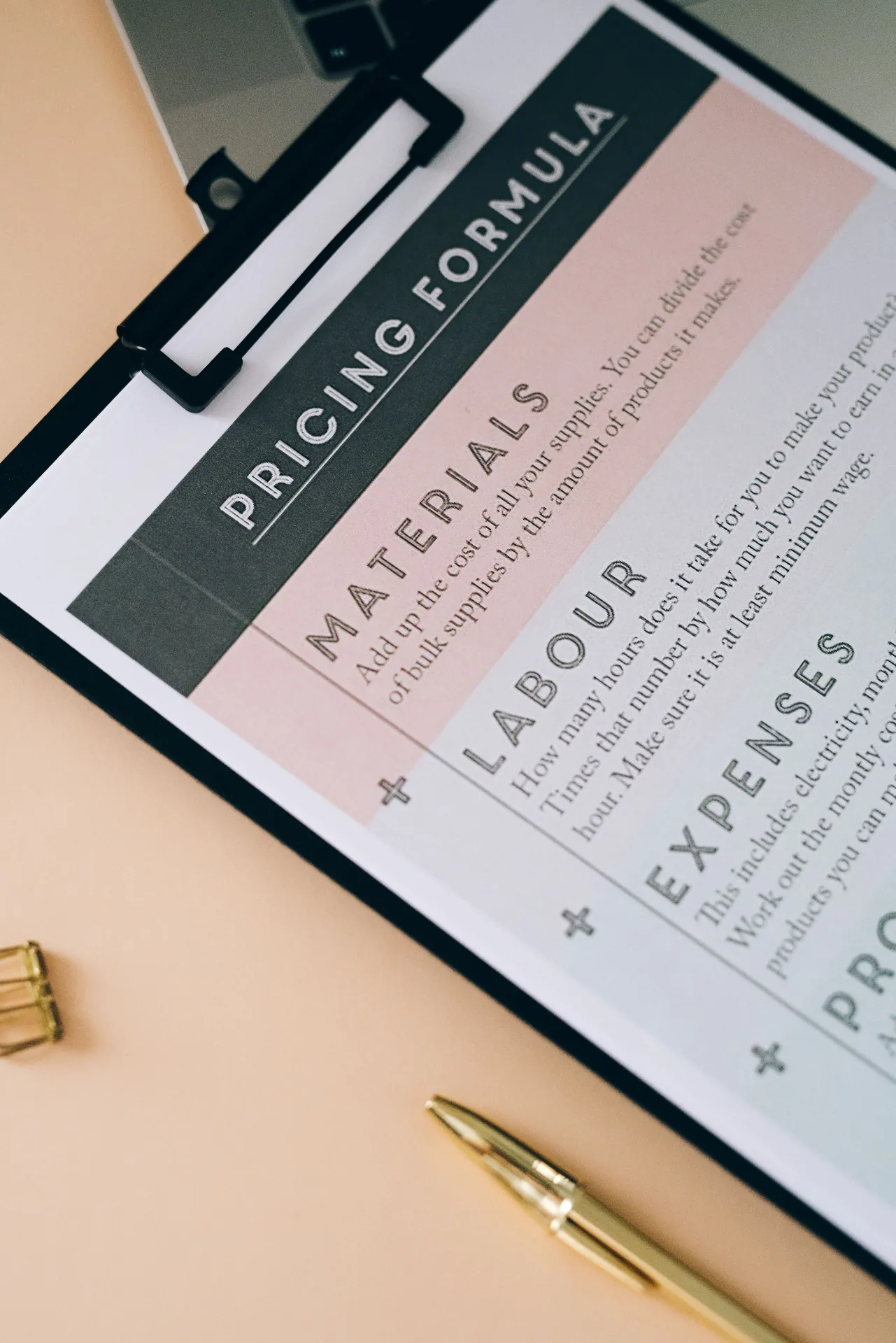
Getting your rate right is the difference between a business that funds your life and one that quietly drains your energy for scraps.
You just quoted a number, and the client said yes too fast. That sinking feeling means one thing: you left money on the table. Getting your consulting hourly rate right is the difference between a business that funds your life and one that quietly drains your energy for scraps. This guide walks you through how to price your time with confidence, how to move past the hourly trap, and how to build a consulting business model that actually pays you what your expertise is worth.
No fluff. Just a practical framework you can use today, backed by real data and clear examples.
Why Your Consulting Hourly Rate Is Harder to Set Than It Looks
Setting a rate feels personal because it is. You are not just picking a number; you are putting a price on your judgment, your years of hard-won skill, and your reputation. Charge too little and you attract clients who nickel-and-dime you. Charge too much without the positioning to support it, and prospects vanish before the first call.
Here is a truth that trips up almost every new consultant: your salary as an employee is not your rate. When you work for yourself, one number has to cover far more than take-home pay.
A useful anchor comes from government data. The U.S. Bureau of Labor Statistics reports that the median annual wage for management analysts was $101,190 in May 2024. That figure covers salaried employees, though. It does not include pay for self-employed workers, agriculture workers, or workers in private households because these data are not collected by the Occupational Employment and Wage Statistics (OEWS) survey. In plain terms: as an independent, you have to build your own cushion into every hour you bill.
What Independent Consultants Actually Charge Per Hour

Independent consulting rates in the United States commonly land between roughly $75 and $350 per hour, with many solo practitioners settling somewhere in the $150 to $250 range depending on niche and experience. Newer consultants often start near $50 to $75 an hour, while senior specialists in high-demand fields can command $300 or more. Your exact number depends on four things: experience, specialization, location, and the size of the impact you deliver.
The demand backdrop helps too. The BLS projects that employment of management analysts is projected to grow 9 percent from 2024 to 2034, much faster than the average for all occupations. A growing market gives you room to raise rates over time rather than compete on price.
Here is how the common rate tiers tend to break down:
| Experience Level | Typical Hourly Range | Best Suited For |
|---|---|---|
| New / Building Portfolio | $50 – $100 | Winning first clients and gathering testimonials |
| Mid-Level Generalist | $100 – $200 | Established track record, broad skill set |
| Senior Specialist | $200 – $350 | Deep niche expertise and proven results |
| Elite / Scarce Skill | $350 – $500+ | Rare, high-demand specialties clients cannot easily find |
The 5-Step Formula to Calculate Your Consulting Hourly Rate
Your hourly rate should be built from the ground up, not guessed. Follow these five steps to land on a floor you can defend and grow from.
- Set your target income. Decide what you want to earn in a year, then treat that as the salary your business must generate for you.
- Add your business costs. Layer in self-employment tax, health insurance, retirement, software, and marketing. Many consultants add 30 to 40 percent on top of their target income to cover these.
- Use realistic billable hours. A full-time year is about 2,080 hours, but you will spend a big chunk on sales, admin, and marketing. Plan for roughly 1,000 to 1,200 billable hours, not 2,080.
- Divide to find your floor. Take your target income plus costs, then divide by your billable hours. That number is the minimum rate where your business stays sustainable.
- Compare against the market. Check what others in your niche charge. If your floor is $141 and the market pays $200 to $250, price at market and pocket the margin.
A quick worked example: Say you want to earn $120,000. Add 35 percent for costs and you need about $162,000 in revenue. Divide by 1,100 billable hours and your floor is roughly $147 an hour. If your niche supports $225, that gap is your profit and your safety net.
For a deeper dive on moving past the hourly floor, read how to price consulting services.
Hourly vs. Project vs. Retainer: Choosing the Right Consulting Business Model
Hourly billing is the easiest place to start, but it has a built-in flaw: the better and faster you get, the less you earn per result. The right pricing model depends on the type of work and how your client prefers to buy. Here is how the main options compare.
| Pricing Model | How It Works | Best For | Main Risk |
|---|---|---|---|
| Hourly | Client pays a set fee per hour worked | Open-ended advisory or undefined scope | Caps income; penalizes efficiency |
| Project-Based | Flat fee for a defined scope and deliverables | Clear outcomes like a strategy or plan | Scope creep without a written statement of work |
| Monthly Retainer | Fixed fee for set hours or ongoing access | Long-term relationships needing regular input | Unlimited-access expectations if terms are vague |
| Value-Based | Price tied to the measurable result you create | Work with clear, high financial upside | Requires a strong value conversation upfront |
Value-based pricing is where the real leverage sits. If your recommendation saves a client $500,000 a year, a $50,000 fee is an easy yes because it returns ten times its cost. To price this way, you have to lead with a strong consulting value proposition and talk about outcomes, not hours.
Building a Consulting Value Proposition That Justifies Premium Rates

Your rate is a reflection of the value clients believe you deliver, not just the time you spend. Strategic work that shapes a company's direction is worth more than execution work that follows a plan someone else made. Before you name a price, get clear on the specific, measurable problem you solve and what it costs the client to leave that problem unsolved. That clarity lets you charge for impact instead of clock time.
To strengthen your positioning, focus on these levers:
- Specialize. A niche expert almost always out-earns a generalist with the same years of experience.
- Show proof. Case studies, testimonials, and hard numbers reduce a client's perceived risk.
- Quantify outcomes. Translate your work into revenue gained, costs cut, or time saved.
- Communicate confidently. State your rate as a fact, not a question, and be ready to stand behind it.
How a Consulting Website Design Supports Your Pricing
A polished, credible online presence quietly does pricing work for you before you ever get on a call. Smart consulting website design signals that you are a serious professional, not a hobbyist, which makes your rates feel justified. Feature results-focused case studies, clear service descriptions, and social proof front and center. When a prospect arrives already convinced of your credibility, the conversation about fees becomes far easier.
How to Start a Consulting Business Without Underpricing Yourself
When you first start a consulting business, the temptation to undercharge is strong, because a low rate feels like a safer way to win that first client. Resist going too low. A discount to break in can be smart, but frame it clearly as a discount off your real rate so the client knows your true value.
Consider this hypothetical scenario. Imagine Maya, a former operations director launching her own practice. She calculates a floor of $150 an hour but feels nervous, so she quotes $75 to land her first client. The project goes well, she collects a strong testimonial, and she uses it to raise her next quote to $120, then $175 within a year. The lesson: a strategic starting discount is fine, but it should be a deliberate on-ramp to your target rate, not a permanent ceiling.
Avoid these common pricing mistakes as you grow:
- Pricing off hours worked instead of hours you can actually bill.
- Forgetting to raise rates as inflation and your skills rise.
- Lowering fees to win a deal, which signals doubt about your own value.
- Skipping a written scope, which invites scope creep on every project.
Frequently Asked Questions
How much should I charge as a consultant just starting out?
Start by calculating your rate floor, then position yourself near the lower end of your industry's range while you build a portfolio. Many new consultants begin around $50 to $100 an hour, then raise rates after each successful project and testimonial. Frame any early discount as a temporary offer off your true rate so clients understand your real value from day one.
How do I calculate my consulting hourly rate?
Divide your desired annual income plus business costs by your realistic billable hours. Aim for roughly 1,000 to 1,200 billable hours a year, not 2,080, since much of your time goes to sales, admin, and marketing. Add 30 to 40 percent on top of your target income to cover self-employment tax, insurance, and overhead. The result is your minimum sustainable rate.
Is it better to charge hourly or per project?
It depends on the work. Hourly billing suits open-ended advisory or engagements where the scope is genuinely unclear. Project-based pricing works best when there is a defined deliverable, because it gives clients cost certainty and rewards you for working efficiently. As you gain confidence, value-based pricing tied to measurable outcomes usually earns the most.
How often should I raise my consulting rates?
Review your rates at least once a year and after any major win or new certification. Holding the same rate for several years amounts to a pay cut once inflation is factored in. A practical habit is to raise your rate modestly with each new client or completed project, so increases feel natural rather than abrupt to existing clients.
Why do consulting firms charge so much more than independents?
Large firm rates include heavy overhead: teams of analysts, brand prestige, formal processes, and risk transfer. When a big firm bills several hundred dollars an hour, that fee prices the whole institution, not one person's expertise. Independent consultants deliver similar insight without that overhead, which means you can charge less on paper yet often take home more per engagement.
Ready to Price Your Expertise With Confidence?
Your rate is a business decision, not a self-worth test. Build it from real numbers, anchor it to the value you create, and raise it as your track record grows. Do that, and pricing stops feeling like a gamble and starts feeling like strategy.
If you want help turning your expertise into a consulting business that scales, get in touch to talk through your pricing, positioning, and growth plan. Bring your questions about your rate or your model, and let's map out the next step together.