Drone Defense
C-UAS Explained: A Plain-English Guide to Counter-Drone Defense
Small drones have changed the economics of conflict and security. This guide explains what counter-UAS actually means, how drone defense works end to end, and why the hardest problem is not technical — it is mathematical.
What Is a UAS — and What Is C-UAS?
UAS stands for unmanned aircraft system: the aircraft itself, its control link, and the person or software flying it. In everyday language we just say "drone," but the formal term matters because law, regulation, and defense policy are all written around it. A UAS can be a toy-grade quadcopter, a commercial filming platform, or a long-range military aircraft — the category is enormous.
C-UAS — counter-unmanned aircraft systems, usually written "counter-UAS" or simply "counter-drone" — is everything done about the ones that should not be there. The c-uas meaning covers the full chain: detecting a drone, tracking it, identifying whether it is a threat, and defeating it if necessary. When people talk about an anti drone system or anti drone technology, they are talking about some piece of that chain.
The field barely existed fifteen years ago. Today it is one of the fastest-moving areas in defense, driven by a simple fact: capable drones have become cheap, abundant, and easy to modify.
The Threat: Small, Cheap, and Everywhere
The US military sorts drones into groups by size. The ones driving the counter-drone problem are the smallest:
- Group 1 — under 20 lbs, flying low and slow. This is the consumer quadcopter class: the kind anyone can buy online for a few hundred dollars.
- Group 2 — 21 to 55 lbs. Larger commercial and improvised platforms with real payload capacity and longer range.
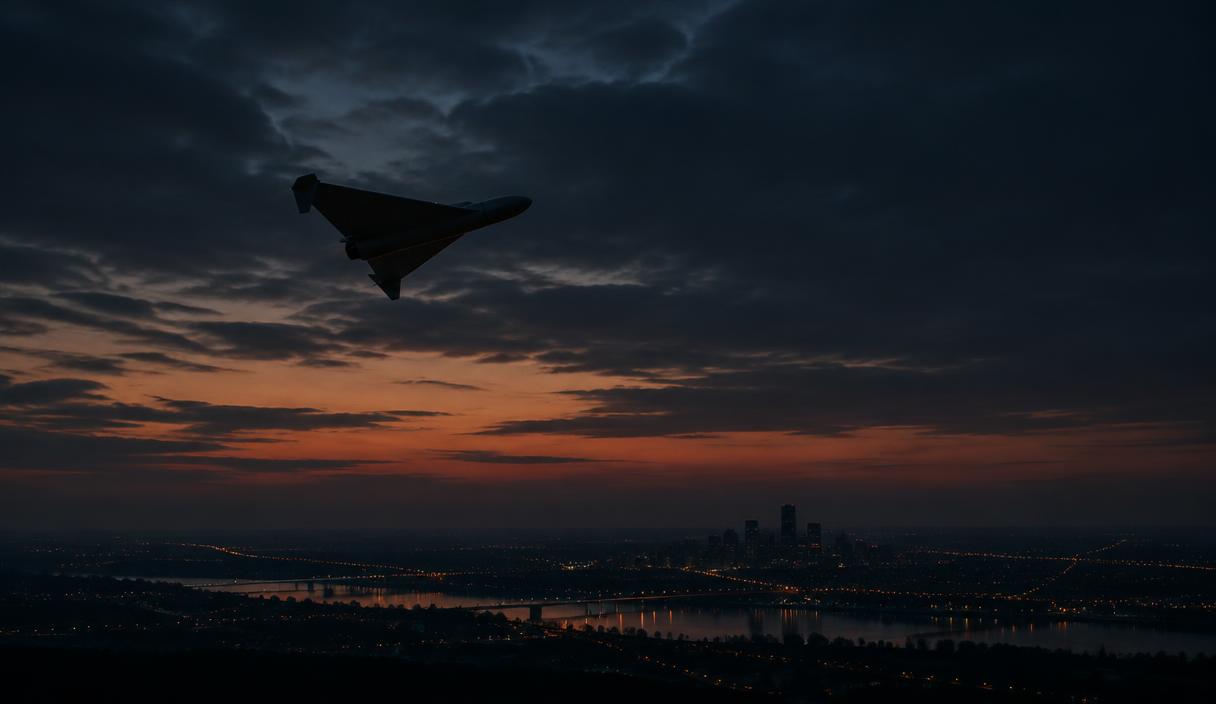
- Group 3 — up to 1,320 lbs. This class includes long-range one-way attack drones that can travel hundreds of miles to strike a target.
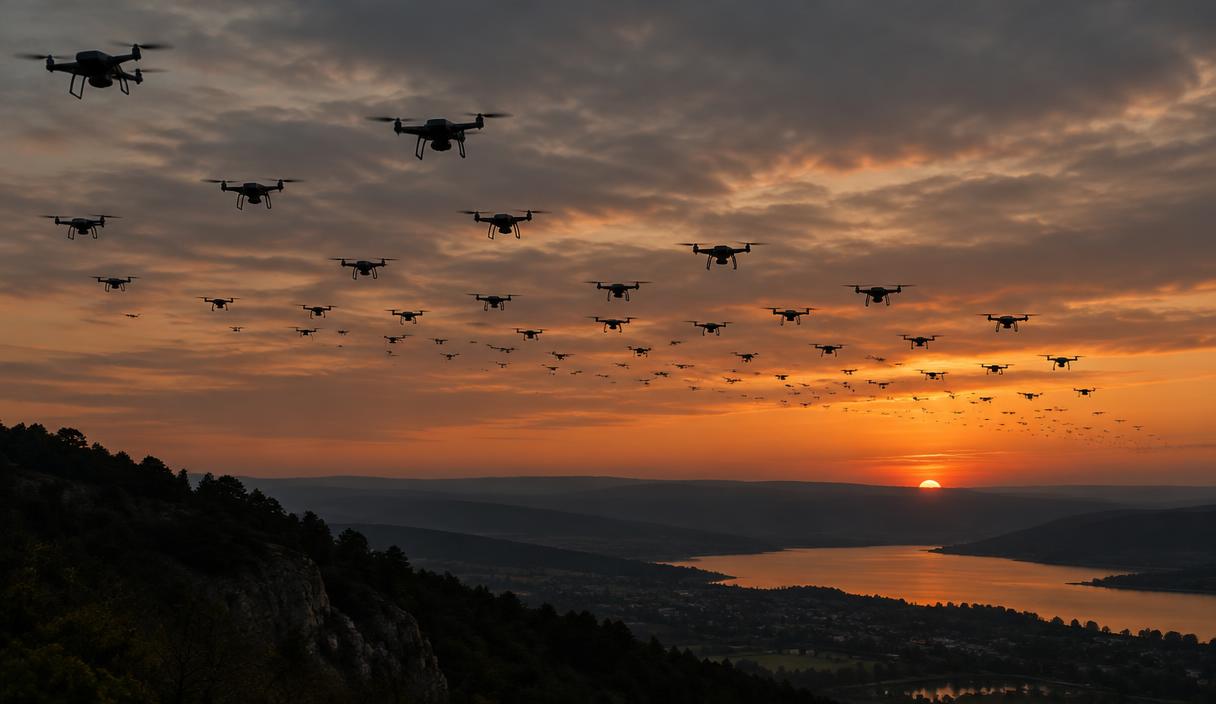
Two developments made these categories urgent. The first is the cheap one-way attack drone — essentially a flying munition built from commercial parts, costing a few thousand dollars or less, used in large numbers. The second is the swarm: many drones arriving together, whether loosely coordinated or simply massed, designed to exhaust defenses built to engage one target at a time.
None of this requires a nation-state budget. That is the point — and the problem.
How Counter-UAS Works: Detect, Track, Identify, Defeat
Every counter drone system, from a man-portable unit to a base-wide installation, follows the same four-step chain. Each step is its own engineering problem.
Detect. You cannot stop what you cannot see. Small drones are hard to spot: they are slow, low, and physically tiny, with radar cross-sections closer to a bird than an aircraft. Detection usually layers several sensors — RF scanners that listen for the radio link between drone and operator, specialized radar tuned for small targets, electro-optical and infrared cameras, and sometimes acoustic arrays. No single sensor is sufficient; fusion of several is the norm.
Track. Once detected, the system must hold the target: position, speed, heading, and altitude, updated continuously. Tracking matters because defeat options need a fire-quality solution, and because a drone's flight path tells you what it might be heading toward.
Identify. The hardest step. Airspace is full of legitimate drones — delivery, inspection, photography, hobbyists. A counter uas system must distinguish a lost hobbyist from a genuine threat, often in seconds. Identification uses the drone's RF signature, its behavior, remote ID broadcasts where available, and increasingly machine-learning classification.
Defeat. Only after the first three steps does anyone act — and the options each come with real trade-offs.
Defeat Options: An Honest Scorecard
Drone mitigation is not one technology but a menu. Each option has a place, and each has a catch.
RF jamming and spoofing
Jamming floods the drone's control or navigation frequencies; spoofing feeds it false signals, for example fake GPS coordinates. Pros: cheap per engagement, no debris, effective against drones that depend on a radio link or satellite navigation. Cons: useless against drones flying pre-programmed autonomous routes or hardened links, indiscriminate — it can disrupt friendly systems — and heavily restricted by law in civilian settings.
Directed energy (lasers and high-power microwave)
Lasers burn through a drone's structure or optics; high-power microwave systems fry its electronics. Pros: extremely low cost per shot, deep "magazine," fast. Microwave can engage several drones at once, which matters against swarms. Cons: high upfront cost, weather and line-of-sight limits for lasers, large power and cooling demands, and still relatively early in deployment.
Guns and cannons
From small arms with specialized sights to automated cannon systems firing airburst rounds. Pros: proven, relatively cheap per shot, effective at short range. Cons:limited range and altitude, what goes up comes down — a serious constraint over populated areas — and difficult against small, fast, maneuvering targets.
Missiles
The traditional air-defense answer. Pros: long range, high probability of kill, works against the largest threats. Cons: cost. Using a missile that costs hundreds of thousands of dollars against a drone that costs a few thousand is losing arithmetic — which leads directly to the cost-curve problem below.
Kinetic interceptor drones
Drones that hunt drones: fast interceptor aircraft that ram a hostile drone or disable it physically. Pros: cost per engagement in the same ballpark as the threat, precise — the intercept happens at a chosen point rather than over whatever is below — and reusable in some designs. Cons: requires excellent detection and tracking to guide the intercept, limited endurance, and one interceptor per target means swarms remain hard.
Nets and capture
Net guns, net-carrying drones, and entanglement systems that capture a drone intact. Pros: minimal debris, the drone can be recovered for investigation. Cons:very short range, slow, and impractical against fast or numerous targets.
Real deployments layer several of these. There is no silver bullet — anyone selling one should be treated with skepticism.
The Cost-Curve Problem
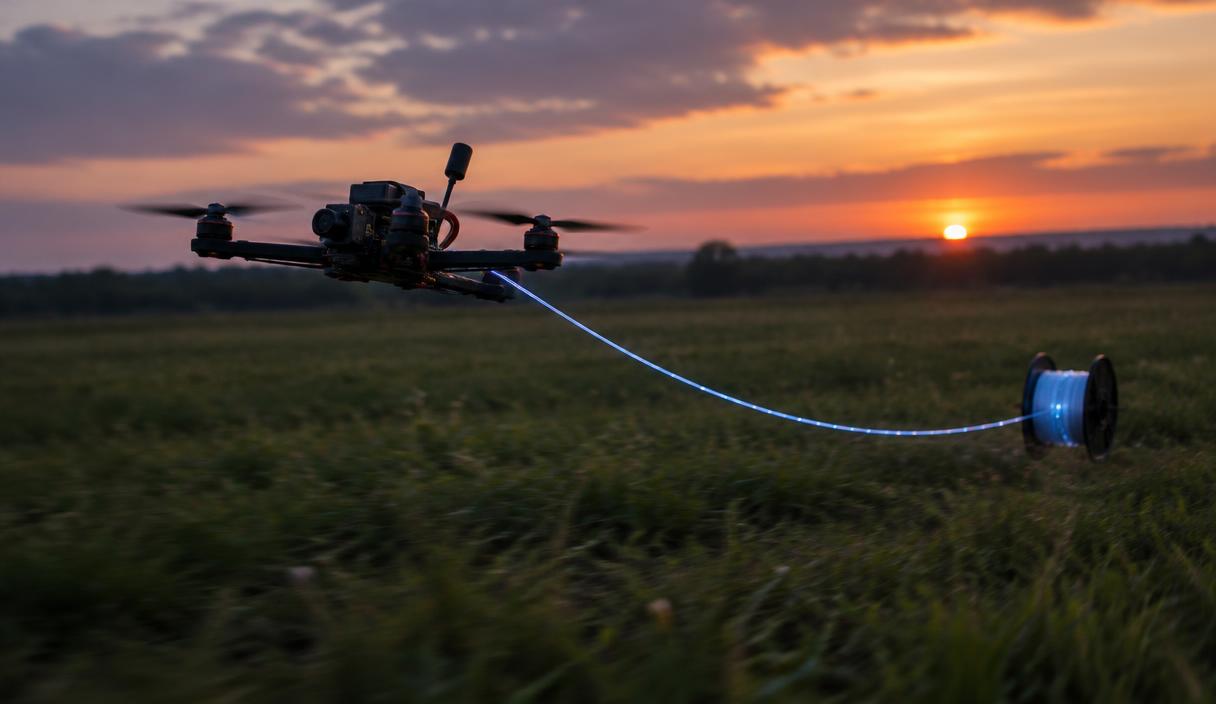
The defining challenge of counter-drone defense is not technical. It is economic. An attacker can field a one-way attack drone for a few thousand dollars — or an FPV drone for a few hundred. If the defender answers with a missile costing fifty or a hundred times more, the attacker wins by attrition even when every shot succeeds. Defending "successfully" this way simply bankrupts the defender slower.
This is why so much energy in the field goes into cheap defeat: electronic warfare with near-zero cost per engagement, directed energy with a cost per shot measured in dollars, and interceptor drones priced in the same range as the drones they kill. The goal is to bend the exchange ratio back below one — to make defense cheaper than attack.
Whoever solves the cost curve at scale changes the balance. That is the race now underway across the counter-drone landscape.
The Legal Picture in the United States
Counter-drone law in the US is unusually restrictive, and it surprises most people who look into it. At a high level:
Detection is broadly legal. Passive sensors — RF scanners, radar, cameras — can be operated by private companies, airports, stadiums, and local agencies. Knowing a drone is there is not the hard legal problem.
Defeat is not. Jamming violates federal communications law. Spoofing GPS is restricted. Physically disabling or seizing an aircraft — and a drone is legally an aircraft — implicates federal statutes. Only a small set of federal agencies, including the Department of Defense, Department of Homeland Security, Department of Justice, and Department of Energy, hold explicit statutory authority to defeat drones, and only for defined missions.
State and local police, and private security, generally cannot lawfully take down a drone even when it is clearly hostile — they detect, and they call federal partners. Congress has debated expanding these authorities for years; the framework is evolving, and anyone operating in this space needs current legal advice, not a blog post. But the headline is simple: in the US, counter-drone is as much a legal problem as a technical one.
Frequently Asked Questions
What does C-UAS stand for?
C-UAS stands for counter-unmanned aircraft systems. It refers to the technologies, tactics, and procedures used to detect, track, identify, and defeat drones that pose a threat. You will also see it written as counter-UAS, C-UAS, or simply counter-drone.
What is a UAS?
UAS stands for unmanned aircraft system — the drone itself plus its ground control station, communications link, and operator. The term covers everything from a $300 consumer quadcopter to large military aircraft. 'Drone' is the everyday word; UAS is the formal one used in regulation and defense.
Why can't you just shoot down a drone over a city?
Two reasons. Legally, in the United States only a small number of federal agencies hold authority to disable or destroy a drone — state and local police, and private security, generally may not. Practically, kinetic defeat over populated areas creates falling debris and collateral risk, so soft-kill options like jamming or controlled intercept are preferred where they are permitted.
What is the cost-curve problem in drone defense?
Attack drones have become extremely cheap — a one-way attack drone can cost a few thousand dollars, and an FPV drone a few hundred — while traditional interceptors like surface-to-air missiles can cost hundreds of thousands to millions of dollars per shot. Defending at that exchange ratio is unsustainable, which is why cheap defeat options like electronic warfare and interceptor drones matter so much.
What is a drone swarm?
A swarm is a group of drones operating together, either coordinated by software or simply launched in mass. Swarms matter because they can saturate defenses: a system built to engage one target at a time can be overwhelmed by twenty arriving simultaneously. Defeating swarms is one of the hardest open problems in counter-drone defense.
Is counter-drone technology legal for private companies to use?
Detection generally is — passive sensors like RF scanners, radar, and cameras are broadly lawful. Defeat is not: jamming, spoofing, hacking, or physically disabling a drone is restricted to specifically authorized federal agencies in the US. Private site owners typically deploy detection and coordinate with law enforcement for response.
Further Reading
Deeper reading on each part of the counter-drone problem.